
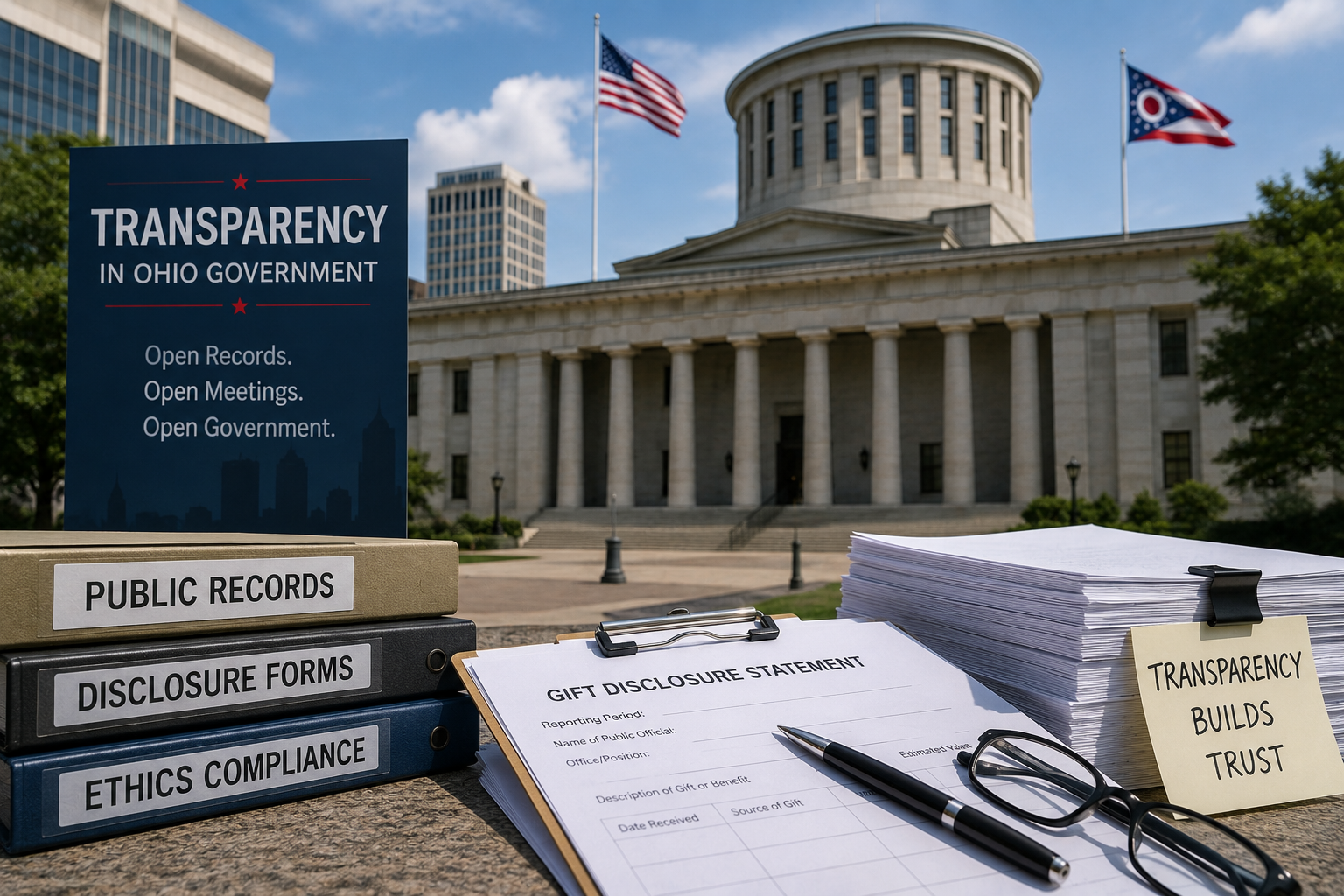
How the Move On Taft Era Put Transparency at the Center of Ohio Politics
Transparency is one of those political ideas that sounds simple until it is tested by a real controversy. Citizens expect public officials to be open about their decisions, relationships, and possible conflicts of interest. Yet the importance of that openness often becomes most visible only after information has been missed, delayed, or left undisclosed.
The Move On Taft era was one of those moments in Ohio political history. The ethics controversy surrounding Governor Bob Taft brought disclosure rules into public view and encouraged a wider discussion about how much information citizens should expect from those who hold state office.
The issue was not limited to a list of gifts or social activities. It became a debate about trust, judgment, and the responsibility of leaders to make their conduct understandable to the public.
Why Disclosure Became a Public Concern
Public officials regularly meet business leaders, advocates, community representatives, political supporters, and other influential people. Those relationships are not automatically improper. In many cases, meeting different groups is a normal part of governing.
The concern begins when citizens cannot clearly see the nature of those relationships. Gifts, private hospitality, travel, meals, and recreational activities can create questions when they are not properly reported. Even when no direct exchange of favors can be proven, the lack of disclosure can make the public wonder whether some individuals have received special access.
This is why disclosure requirements matter. They allow citizens, journalists, and oversight bodies to examine connections that might otherwise remain private. Disclosure does not answer every ethical question, but it gives the public enough information to begin asking informed questions.
The Move On Taft Era and the Question of Trust
During the 2005 controversy, the discussion surrounding Bob Taft became larger than the original reporting failures. The case attracted attention because it involved a sitting governor and challenged the image of responsible state leadership.
For many Ohio residents, the central concern was whether the governor had treated disclosure responsibilities with enough seriousness. Public office carries expectations that go beyond personal intention. Officials are expected to understand the rules connected to their position and recognize why those rules exist.
That distinction is important. A leader may describe a failure as unintentional, but citizens may still question what the failure reveals about attention, judgment, or the culture within an administration. In public life, trust depends not only on motive but also on responsible conduct.
Transparency Is More Than Releasing Information
Political transparency is sometimes described as the simple act of making records available. In practice, it requires more than that. Information must also be complete, timely, understandable, and accessible enough for the public to use.
A document released years after a controversy may add to the historical record, but it cannot provide meaningful oversight at the moment decisions are being made. A form filled with vague language may technically exist while still leaving important questions unanswered.
The broader principle of openness in public conduct and decision-making helps explain why disclosure is only one part of transparency. The larger goal is to reduce uncertainty about how power is used and whose interests may be influencing government.
Why Political Relationships Need Public Context
State government depends on relationships. Governors and other officials need information from businesses, local governments, nonprofit organizations, workers, experts, and residents. However, those relationships become difficult to evaluate when the public lacks context.
A meeting may be a routine policy discussion. A dinner may be a professional event. A golf outing may be social. But if one participant has business before the state, citizens may reasonably want to know more about the interaction.
Transparency does not require the public to assume that every relationship is corrupt. Instead, it allows people to evaluate circumstances with better information. It protects citizens from hidden influence while also giving officials a clearer way to demonstrate that their actions were appropriate.
The Difference Between Privacy and Secrecy
Public officials do not surrender every part of their private lives when they enter office. They still have families, friendships, and personal activities. However, the boundary changes when private relationships overlap with public duties.
Privacy protects personal matters that do not affect government responsibility. Secrecy, by contrast, can prevent the public from understanding relationships that may influence official decisions. The challenge is deciding where one ends and the other begins.
Disclosure laws are designed to help draw that boundary. They identify categories of gifts, financial interests, and relationships that should be reported because they may be relevant to public responsibility. When those rules are followed consistently, officials do not have to rely only on personal judgment about what the public deserves to know.
How Controversies Change Political Expectations
Political controversies can expose weaknesses in rules, oversight, and institutional culture. They may also change what citizens expect from future leaders. After an ethics dispute, practices that once attracted little attention may receive closer examination.
The Move On Taft era contributed to that kind of change in public awareness. It encouraged Ohio residents to think more carefully about gifts, disclosure statements, lobbying relationships, and the ethical responsibilities attached to state office.
The lasting value of the controversy is not found only in remembering who was involved. It is found in understanding why people cared and what they wanted government to do differently.
The Role of Journalism and Public Records
Transparency depends partly on rules, but it also depends on people who use the information those rules produce. Journalists, researchers, civic organizations, and ordinary citizens can examine public records and compare official statements with documented activity.
Without that attention, disclosure forms may exist without producing meaningful accountability. Records become powerful only when someone reads them, identifies gaps, and asks why certain information is missing.
This is one reason local and state political reporting matters. National politics often receives the most attention, but decisions made in state government can affect education, transportation, public safety, taxation, business regulation, and many other parts of daily life.
Transparency Should Begin Before a Crisis
Good transparency practices should not begin only after reporters uncover a problem. They should be part of normal government operations. Officials should understand disclosure rules before accepting gifts or participating in activities that could raise questions.
Agencies should provide clear guidance, regular training, and reliable systems for reporting relevant information. Oversight bodies should also have enough independence and resources to review disclosures properly.
These preventive steps benefit everyone. Citizens receive better information, while officials gain clearer boundaries that can protect them from avoidable controversy. Transparency works best when it is treated as a routine responsibility rather than a response to public pressure.
Preserving the Lesson on a Historical Website
A revived MoveOnTaft.org can help preserve this part of Ohio’s political history without pretending to recreate the original campaign. The site can examine the controversy from a historical perspective and explain the public principles behind it.
An article such as this history of transparency in Ohio politics gives readers context that a brief summary cannot provide. It connects the events of 2005 with larger questions about disclosure, access, influence, and trust.
This approach also allows the domain to grow naturally. Future articles can explore Ohio disclosure laws, the role of ethics commissions, public-record practices, civic organizations, political journalism, and other moments when transparency became an important state issue.
What the Era Can Teach Future Leaders
The Move On Taft era offers a straightforward lesson for anyone entering public office: transparency should never be treated as an administrative inconvenience. It is part of the responsibility that comes with public authority.
Leaders who disclose information clearly and early reduce uncertainty. They show that they understand the difference between private opportunity and public duty. They also make it easier for citizens to judge their conduct fairly.
No transparency system can eliminate every controversy. Rules can be misunderstood, records can be incomplete, and new situations can create difficult ethical questions. But a strong commitment to openness gives government a better foundation for addressing those problems.
Conclusion
The Move On Taft era placed transparency at the center of Ohio politics because it showed what can happen when disclosure responsibilities are not handled carefully. The controversy became more than a dispute over forms or gifts. It became a test of public trust.
Its historical importance lies in the questions it raised. What should officials disclose? How should citizens evaluate relationships between government and private interests? What responsibilities come with holding public power?
Those questions remain relevant because transparency is not only a response to past controversy. It is one of the conditions that allows citizens to trust government in the present.